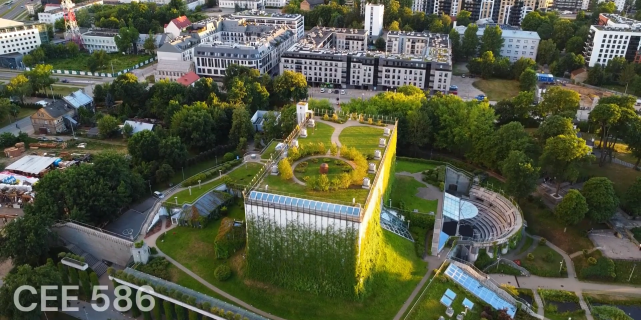
The course aims to integrate laterally a wide range of advanced environmental building design aspects that includes building physics, enhanced natural ventilation, sustainable building materials, rational water usage, global energy demands and renewable/alternative energy technologies, bioclimatic building design, perception of human comfort, and environmental management and strategies. The course also demonstrates examples of both sustainable and unsustainable aspects of current building design practice, and how international policy frameworks can act as both drivers and barriers to sustainable solutions. The course involves individual case studies of international environmental design projects.
Learning Outcomes
Students should be able to:
1. Have a clear understanding of how climate change affects the built environment globally and locally
2. Use climate data in building performance analysis
3. Analyze existing buildings and their energy performance based on observations and calculations, such as building orientation, shading, U- values, degree days, POE, etc.
4. Make sustainable choices as building designers as well as private citizens regarding energy and water consumption, building materials, transportation, waste production, etc.
5. Write a concise paper on a given subject that integrates the topics
discussed in the class and give a short oral presentation within given guidelines.
Course Content
The course aims to integrate laterally a wide range of advanced built environment design aspects and challenges, such as climate change, urban physics, environmental pollution, global energy demands, sustainable building materials, rational water use, waste issues, renewable/alternative energy technologies, perception of human comfort, sustainable cities, ecological footprint analysis, post-occupancy evaluation and environmental management & strategies. The course also demonstrates examples of both sustainable and unsustainable aspects of current building design practice, and how international policy frameworks can act as both drivers and barriers to sustainable solutions.