The Environmental Fluid Mechanics Laboratory of the University of Cyprus

The Environmental Fluid Mechanics Laboratory support both research projects and undergraduate teaching in Environmental Fluid Mechanics.

BREAKING:

Who we are

The EFM Lab studies how fluids move in natural and built environments, using experiments, theory, and computer simulations to understand air and water flows, pollution transport, and other environmental fluid processes. The lab supports both research and undergraduate teaching through advanced experimental setups and analysis tools.

Air Pollution

EFM Lab studies air pollution across local to regional scales, investigating pollutant transport, dispersion, and exposure under complex atmospheric conditions. Combining measurements and advanced modelling, the lab supports air quality assessment and mitigation strategies.

Urban Airflow & Dispersion

The lab examines airflow and pollutant dispersion within urban environments using experiments, field campaigns, and CFD simulations. Research advances understanding of urban ventilation, turbulence, and heat interactions to support climate-sensitive city design.

Water Flows

EFM Lab investigates turbulent, buoyancy-driven, and stratified flows in environmental and confined systems. Experimental and numerical approaches are used to improve understanding of transport and mixing processes.

Water Pollution

Research focuses on contaminant transport and dispersion in natural and engineered water systems. The lab applies fluid dynamics modelling to assess environmental risks and support sustainable water management.

Industrial Applications

The lab translates environmental fluid mechanics into practical solutions for building performance, ventilation, energy efficiency, and safety-related flow scenarios. Work also addresses environmental quality aspects such as thermal comfort, airflow, noise, and lighting.

Environmental Phenomena

EFM Lab studies multi-scale environmental processes including urban heat transfer, atmospheric boundary-layer dynamics, pollutant transport, and fire-driven flows, linking physical understanding with sustainability and resilience challenges.

Our Updates

Explore our latest publication

air quality
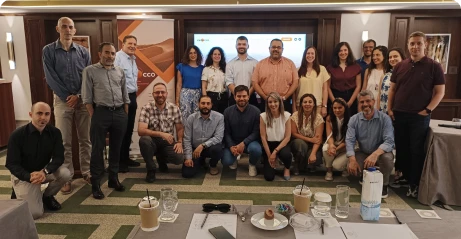
2nd CiROCCO General Assembly
urban
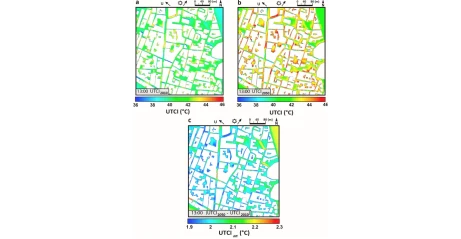
On the impact of climate change on urban microclimate, thermal comfort, and human health: Multiscale numerical simulations
piv
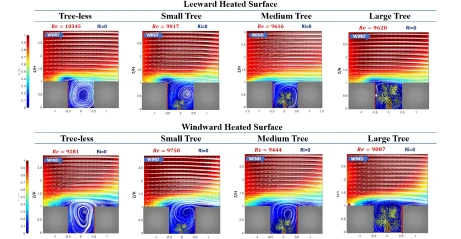
Impact of trees with varying size on street canyon flow under isothermal and non-isothermal conditions using water channel PIV measurements
No posts found

Our Latest Projects

Explore our latest projects

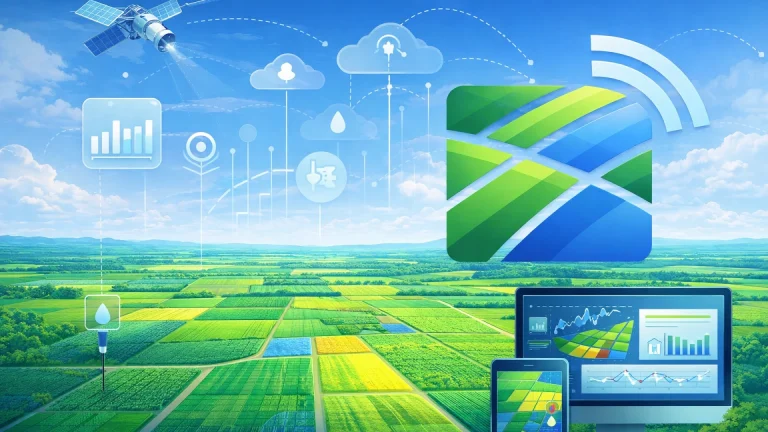
agriproact_1
Read More
trigger
Read More
CiROCCO
Read More